In Stock
See A Prescriber Now
GLP & Metabolic Peptides
TIRZEPATIDE
Tirzepatide is a dual-acting peptide that activates two incretin receptors instead of one: GLP-1 and GIP.…
$100.00
For laboratory & research use only — not for human or veterinary use
Same-day shipping on orders by 2pm EST
USA sourced · USA shipped
Free shipping on orders over $150
4.9/5 from 1,200+ verified researchers
≥99% purity — HPLC + mass spec
Endotoxin tested · sterility verified
COA on every batch
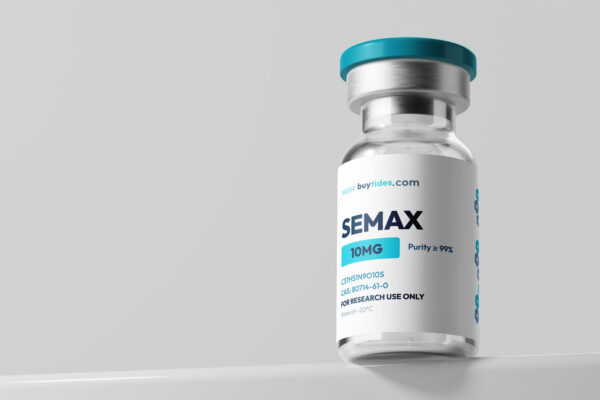
Semax is a synthetic heptapeptide with the sequence Met-Glu-His-Phe-Pro-Gly-Pro, structurally derived from the ACTH(4–10) fragment but modified with a C-terminal Pro-Gly-Pro tripeptide that removes the corticotropic activity of the parent molecule. First characterized at the Institute of Molecular Genetics of the Russian Academy of Sciences in the 1980s, Semax has since become one of the most widely studied neuropeptides in published literature on BDNF and NGF expression, dopaminergic signaling, and cerebral ischemia models.
Compound Name: Semax
Strength: 10mg
Format: Research Peptide
Appearance: Lyophilized Peptide Powder
Purity: ≥ 99% (HPLC Verified)
Storage: −20°C recommended
This product requires a Doctor Referral to be purchased.
See A Prescriber NowPurity guarantee. If an independent assay of your lot returns below the purity stated on its certificate, we replace the order or refund it in full — no return shipment required.
Sold for laboratory research and further manufacturing use only. Not a drug, food, cosmetic, or dietary supplement. Not for human or veterinary use, and not for diagnostic or therapeutic purposes. Buyer is responsible for compliance with all applicable regulations.
Lyophilized Research Compound
Semax 10mg is a synthetic heptapeptide with the sequence Met-Glu-His-Phe-Pro-Gly-Pro (MEHFPGP), an analog of the ACTH(4–10) fragment modified with a C-terminal Pro-Gly-Pro extension that eliminates corticotropic activity while increasing resistance to enzymatic degradation. Supplied in 10mg lyophilized vials (CAS 80714-61-0, MW ~813.9 g/mol), Semax is studied in published neuropeptide literature examining BDNF and NGF expression, dopaminergic and serotonergic signaling, and neuronal survival in cerebral ischemia models.
Each lot is produced by solid-phase peptide synthesis (SPPS) and purified by reverse-phase HPLC to ≥99% purity, with analytical documentation accompanying every order. The lyophilized format supports stable storage at −20°C and reconstitution in bacteriostatic water or sterile diluent according to the receiving laboratory's established protocol. For laboratory research use only.
Semax is a synthetic heptapeptide, Met-Glu-His-Phe-Pro-Gly-Pro, first characterized at the Institute of Molecular Genetics of the Russian Academy of Sciences in the 1980s. It is supplied in 10mg lyophilized vials as a reference compound for laboratory research only.
MEHFPGP is the single-letter amino acid code for the sequence: methionine, glutamic acid, histidine, phenylalanine, proline, glycine, proline. It is a shorthand for the same seven residues written as Met-Glu-His-Phe-Pro-Gly-Pro.
Semax is a seven-residue peptide with the molecular formula C37H51N9O10S, a molecular weight of approximately 813.9 g/mol, and CAS number 80714-61-0. The sulfur atom comes from the N-terminal methionine.
Both descriptions appear in the literature, and they describe the same molecule. ACTH(4-10) is Met-Glu-His-Phe-Arg-Trp-Gly. Semax keeps the first four of those residues and replaces the last three with Pro-Gly-Pro. So it is an ACTH(4-10) analog by position and length, and equivalently the ACTH(4-7) fragment carrying a Pro-Gly-Pro extension. Neither description is wrong; they emphasize different halves of the same substitution.
The residues responsible for stimulating cortisol release lie outside the fragment Semax retains. By keeping only positions 4 through 7 and substituting synthetic residues for the rest, the analog separates the neuroactive properties of the region from the endocrine activity of the parent hormone. That separation is the entire reason the fragment is studied rather than ACTH itself.
Pro-Gly-Pro is a glyproline motif attached at the C-terminus. It slows exopeptidase cleavage, substantially increasing resistance to enzymatic degradation compared with the bare ACTH fragment, which would not survive most assay conditions long enough to study.
Common applications include BDNF and NGF expression studies, dopaminergic and serotonergic signaling work, neuronal survival in cerebral ischemia models, attention and memory consolidation paradigms, and neurotrophin gene transcription analysis.
Both are neurotrophins, but they act through different receptors and support different neuron populations. BDNF signals primarily through TrkB and is associated with synaptic plasticity; NGF signals through TrkA and is associated with cholinergic and sensory neurons. Semax literature reports effects on both, which is why they are measured separately.
Ischemia models test neuronal survival under oxygen and glucose deprivation, a setting where neurotrophin expression becomes directly measurable against a clear endpoint. Published work reports that both Semax and its Pro-Gly-Pro fragment upregulate transcription of neurotrophin and neurotrophin-receptor genes in these models.
The peptide is identical. This product is a 10mg lyophilized vial, leaving solvent and preparation to you. The nasal spray is supplied as a research kit with a mist applicator. Choose the vial when your protocol specifies its own reconstitution.
Purity is 99% or greater as verified by HPLC. Analytical documentation accompanies every order, and that figure is what our purity guarantee is measured against.
Store the lyophilized vial at -20 degrees Celsius, protected from light and moisture. Once reconstituted with bacteriostatic water, refrigerate the solution at 2-8 degrees Celsius and follow your laboratory's established protocols.
Orders leave the same business day when placed before 2pm EST, in an insulated mailer with a phase-change pack. Shipping is free on orders over $150.
Our peptides require a doctor referral. If you do not have one, use the Get a Prescription button to start a telehealth consultation, and your approved products will unlock on your account.
GLP & Metabolic Peptides
Tirzepatide is a dual-acting peptide that activates two incretin receptors instead of one: GLP-1 and GIP.…
Peptides
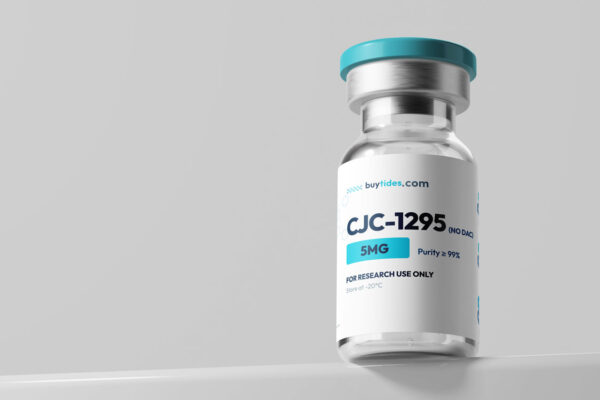
CJC-1295 No DAC is a synthetic analog of the GHRH (1-29) peptide sequence, engineered for greater…
Brain & Cognition
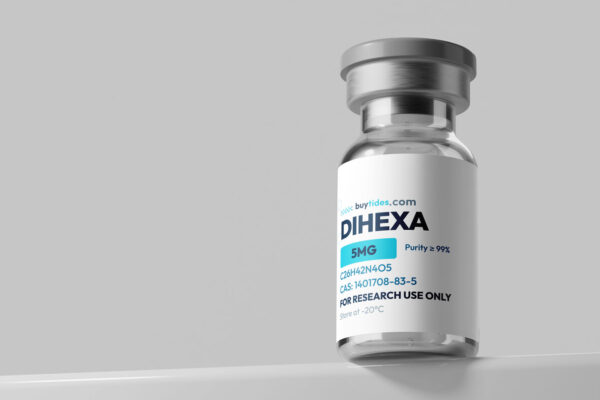
Dihexa is a small-molecule angiotensin IV analog investigated in neuroscience research for its role in synaptogenesis…
Anti-Aging & Longevity
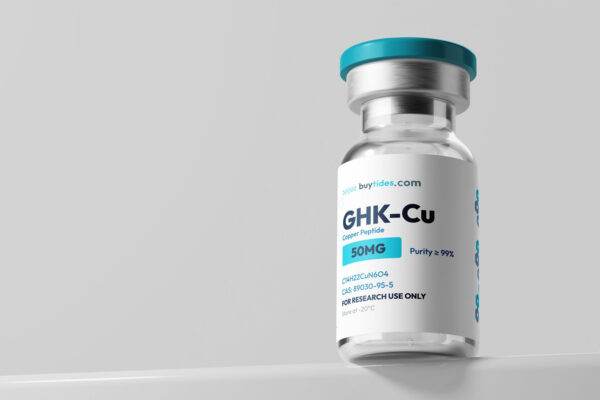
GHK-Cu is a naturally occurring copper-binding tripeptide found in human plasma, saliva, and urine. Plasma levels…
GLP & Metabolic Peptides
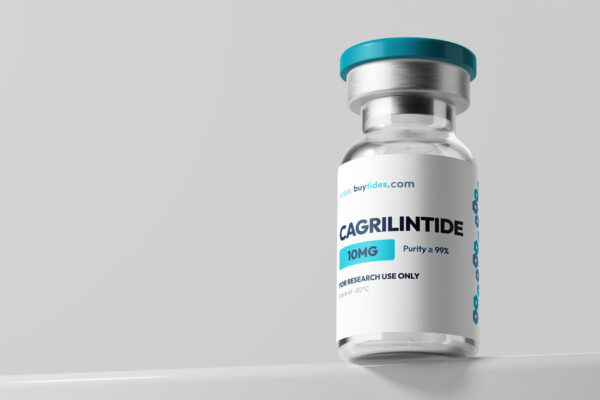
Cagrilintide is a long-acting synthetic amylin analog studied in laboratory research for amylin and calcitonin receptor…
GLP & Metabolic Peptides
Semaglutide is a GLP-1 receptor agonist and the best-studied drug in its class. It mimics glucagon-like…
Metabolic & Body Composition
AOD-9604 is a fragment of human growth hormone (HGH): specifically the section responsible for fat metabolism,…
Gut & Inlammation
KPV is a synthetic tripeptide composed of lysine, proline, and valine (Lys-Pro-Val), used in laboratory research…
Join the researcher list for restock alerts, COA updates and a 10% code on your first order.
Shop Peptides