In Stock
See A Prescriber Now
Peptides
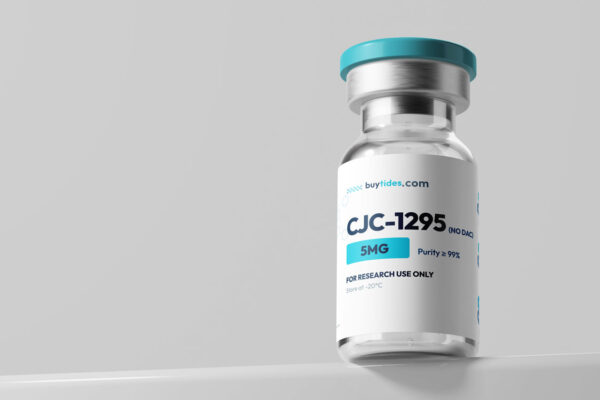
CJC-1295 (NO DAC)
CJC-1295 No DAC is a synthetic analog of the GHRH (1-29) peptide sequence, engineered for greater…
$110.00
For laboratory & research use only — not for human or veterinary use
Same-day shipping on orders by 2pm EST
USA sourced · USA shipped
Free shipping on orders over $150
4.9/5 from 1,200+ verified researchers
≥99% purity — HPLC + mass spec
Endotoxin tested · sterility verified
COA on every batch
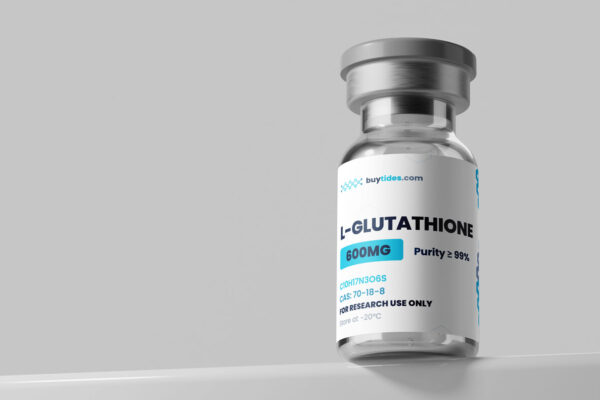
L-Glutathione (GSH) is a synthetic tripeptide built from L-glutamate, L-cysteine, and glycine. In cell biology it is the reference intracellular thiol antioxidant, and it is widely used as a research standard in oxidative-stress and redox-signaling work. BuyTides supplies L-Glutathione at 600 mg per vial, HPLC-purified and lot-tested.
Compound Name: L-Glutathione
Available Strengths: 600 mg · 1500 mg
Purity: ≥ 99% (HPLC Verified)
Appearance: Lyophilized Peptide Powder
Format: Research Compound
Reconstitution: Suitable for laboratory assay preparation.
This product requires a Doctor Referral to be purchased.
See A Prescriber NowPurity guarantee. If an independent assay of your lot returns below the purity stated on its certificate, we replace the order or refund it in full — no return shipment required.
Sold for laboratory research and further manufacturing use only. Not a drug, food, cosmetic, or dietary supplement. Not for human or veterinary use, and not for diagnostic or therapeutic purposes. Buyer is responsible for compliance with all applicable regulations.
Lyophilized Research Compound
L-Glutathione (GSH) is a synthetic tripeptide — gamma-L-glutamyl-L-cysteinyl-glycine — supplied for laboratory research in redox biology, thiol-disulfide exchange, and controlled biochemical investigation. As the primary endogenous low-molecular-weight thiol antioxidant, GSH is the reference compound for studying intracellular antioxidant capacity, glutathione S-transferase conjugation, and related mechanisms. Its cysteinyl thiol group neutralizes reactive oxygen species, donates electrons in glutathione peroxidase reactions, and forms conjugates with electrophilic xenobiotics via glutathione S-transferases. Investigators use L-Glutathione to model cellular redox homeostasis, study Phase II detoxification pathways, probe protein S-glutathionylation as a post-translational regulatory mechanism, and quantify intracellular GSH:GSSG ratios in oxidative-stress assays.
L-Glutathione, abbreviated GSH, is a synthetic tripeptide built from L-glutamate, L-cysteine, and glycine. It is the primary endogenous low-molecular-weight thiol antioxidant and the reference compound in intracellular redox research. Supplied as a lyophilized powder for laboratory research only.
L-Glutathione is a linear tripeptide, gamma-L-glutamyl-L-cysteinyl-glycine, with the molecular formula C10H17N3O6S, a molecular weight of 307.32 g/mol, and CAS number 70-18-8. The free cysteinyl thiol is the redox-active group.
Ordinary peptide bonds link the alpha-carboxyl of one residue to the amino group of the next. In glutathione, glutamate is joined through its side-chain gamma-carboxyl instead. That atypical linkage is what makes the molecule resistant to standard peptidases, since those enzymes recognize alpha-peptide bonds. It is the structural reason glutathione persists intracellularly at millimolar concentrations.
GSH is the reduced form, carrying a free thiol. GSSG is the oxidized form, two glutathione molecules joined by a disulfide bond between their cysteine residues. GSH is converted to GSSG when it neutralizes reactive oxygen species, and glutathione reductase converts it back.
The ratio of reduced to oxidized glutathione is the standard quantitative readout of cellular redox state. A shift toward GSSG indicates oxidative stress, which is why this ratio is measured across most oxidative-stress assay designs rather than either species alone.
Common applications include GSH:GSSG ratio assays and intracellular thiol status, reactive oxygen species scavenging models, glutathione S-transferase and conjugation mechanisms, enzymatic and non-enzymatic antioxidant screening, and mitochondrial and hepatic oxidative-damage models.
S-glutathionylation is the reversible attachment of glutathione to a protein cysteine residue. It functions as a post-translational regulatory mechanism and as protection against irreversible cysteine oxidation, and it is studied as a redox signaling event rather than simple antioxidant chemistry.
Glutathione S-transferases are enzymes that conjugate glutathione to electrophilic compounds, marking them for elimination. This is the core of Phase II detoxification, and glutathione is the required substrate, which makes GSH a standard reagent in those assays.
The free cysteinyl thiol is readily oxidized by dissolved oxygen and by trace metal ions, converting GSH to GSSG. This matters for assay design: solutions prepared and left standing will drift toward the oxidized form, which is why fresh preparation and controlled handling are standard practice in redox work.
L-Glutathione is offered at 600 mg and 1500 mg per vial. Both are the same compound and purity; the difference is quantity.
Purity is 99% or greater as verified by HPLC. Lot-specific results are reported on the certificate of analysis accompanying each vial, and that figure is what our purity guarantee is measured against.
Store the lyophilized vial at -20 degrees Celsius, protected from light and moisture. Once reconstituted with bacteriostatic water, store the material refrigerated and use per laboratory protocol. Because the thiol group oxidizes on standing, reconstituted glutathione has a shorter usable window than most peptides in this catalog.
Orders leave the same business day when placed before 2pm EST, in an insulated mailer with a phase-change pack. Shipping is free on orders over $150.
Our peptides require a doctor referral. If you do not have one, use the Get a Prescription button to start a telehealth consultation, and your approved products will unlock on your account.
Peptides
CJC-1295 No DAC is a synthetic analog of the GHRH (1-29) peptide sequence, engineered for greater…
Brain & Cognition
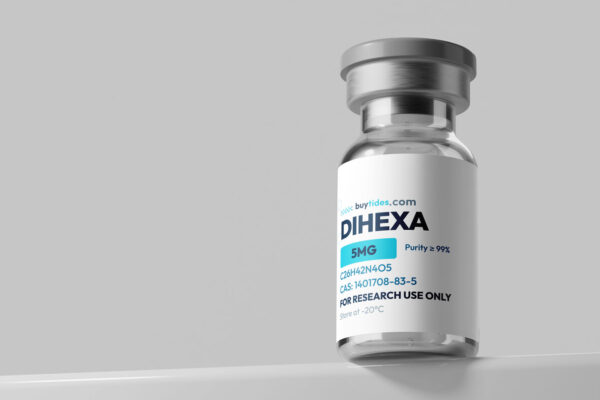
Dihexa is a small-molecule angiotensin IV analog investigated in neuroscience research for its role in synaptogenesis…
Anti-Aging & Longevity
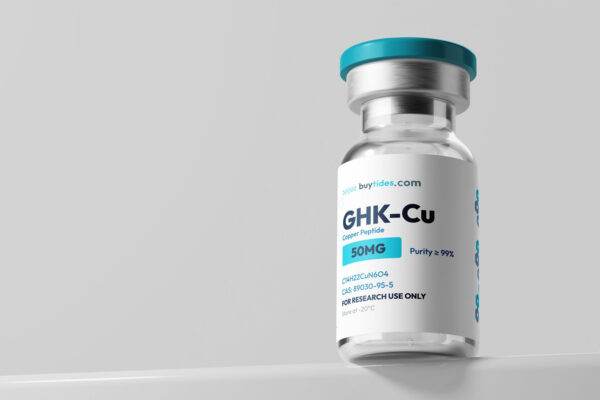
GHK-Cu is a naturally occurring copper-binding tripeptide found in human plasma, saliva, and urine. Plasma levels…
GLP & Metabolic Peptides
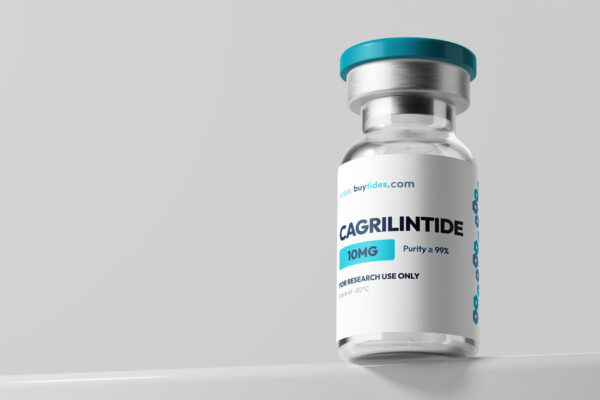
Cagrilintide is a long-acting synthetic amylin analog studied in laboratory research for amylin and calcitonin receptor…
GLP & Metabolic Peptides
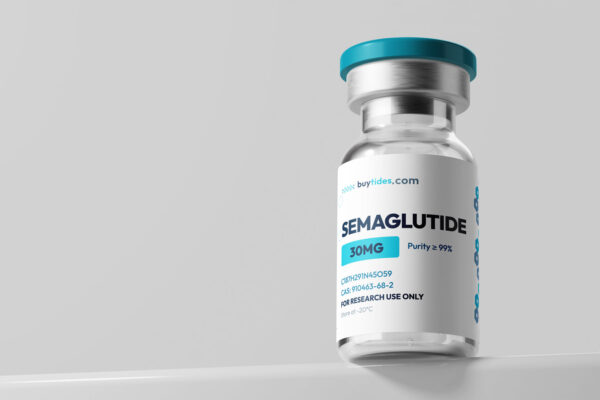
Semaglutide is a GLP-1 receptor agonist and the best-studied drug in its class. It mimics glucagon-like…
GLP & Metabolic Peptides
Tirzepatide is a dual-acting peptide that activates two incretin receptors instead of one: GLP-1 and GIP.…
Metabolic & Body Composition
AOD-9604 is a fragment of human growth hormone (HGH): specifically the section responsible for fat metabolism,…
Gut & Inlammation
KPV is a synthetic tripeptide composed of lysine, proline, and valine (Lys-Pro-Val), used in laboratory research…
Join the researcher list for restock alerts, COA updates and a 10% code on your first order.
Shop Peptides